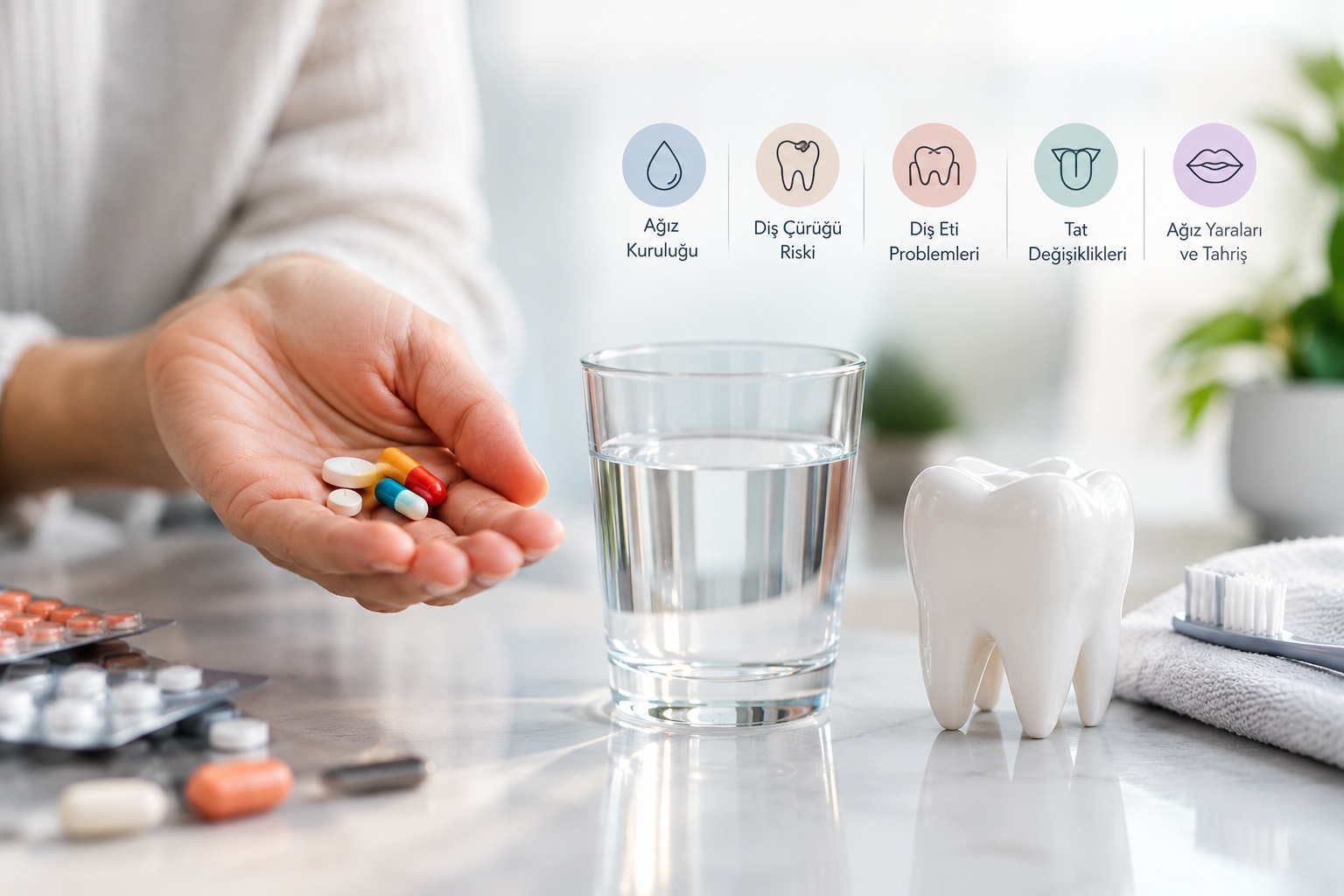
Daily life medications can affect our oral health.
These medicines treat various conditions, but they can also impact oral health.
In particular, long-term use of certain drugs can cause dry mouth and ulcers.
Dental caries, gum problems, and changes in taste may be observed.
Therefore, it is important for individuals who regularly take medications to pay attention to oral health and inform their dentist about the medicines they are using.
Why Do Medications Affect Mouth and Dental Health?
Saliva plays a vital role in protecting oral health. It helps balance acids in the mouth, assists in removing food debris, and supports protection against tooth decay.
Some medicines can reduce saliva production. As a result, dry mouth can develop, weakening the mouth’s natural defense mechanisms.
The type of medication, duration of use, dosage, and the person’s overall health can influence potential oral effects.
1. Dry Mouth and Medication Use
Dry mouth is one of the most common oral side effects of certain medicines.
Antidepressants, antihistamines, blood pressure medicines, and drugs from various treatment groups can reduce saliva quantity.
People experiencing dry mouth may notice:
Increased risk of tooth decay
Bad breath
Burning or sensitivity in the mouth
Discomfort when swallowing or speaking
Dry lips and oral mucosa
If your dry mouth began after starting a medication, it is beneficial to discuss it with both your dentist and the prescribing physician.
2. Do Medications Cause Tooth Decay?
Not every medication directly causes tooth decay. However, medicines that decrease saliva flow can indirectly contribute to a higher risk of decay. This is important for medications and oral health.
With reduced saliva, protecting tooth surfaces from acids in the mouth becomes more difficult. In individuals with prolonged dry mouth, cavities can develop more rapidly.
Additionally, some medicines, particularly certain liquid forms for children, may contain sugar, which is relevant to dental health.
Therefore, individuals who regularly take medications should place greater emphasis on fluoride toothpaste, regular brushing, interproximal cleaning, and routine dental check-ups.
3. Can Medications Affect Gums?
Yes. Some medicines can cause gum overgrowth or other tissue changes.
In particular, certain anti-epileptic drugs, immunosuppressants, and some blood pressure medications are linked to gingival overgrowth.
Gum tissue overgrowth can hinder effective cleaning around the teeth and gum margins, increasing plaque accumulation and contributing to gum inflammation.
If you notice swelling, overgrowth, redness, or bleeding in your gums, it is important to have them evaluated by your dentist.
4. Can Medications Alter Taste?
Some medications can alter the sense of taste. A metallic, bitter, or otherwise unusual taste in the mouth can be a known side effect of certain drugs.
If taste changes occur after beginning a new medication, it is appropriate to inform your doctor.
Do not stop or adjust your medication without consulting your physician.
5. Mouth Sores and Irritation
Certain medicines can cause sensitivity, burning, redness, or ulcers in the oral tissues.
Particularly during treatments that affect the immune system, monitoring changes inside the mouth is important.
If mouth ulcers do not heal quickly, recur, or are accompanied by swelling, bleeding, or noticeable color changes, consult your dentist.
How to Protect Your Oral Health If You Regularly Take Medications
While it may not be possible to prevent all medication-related oral problems, adopting proper oral care habits can help reduce risks.
Brush your teeth at least twice daily with fluoride toothpaste and clean between teeth daily.
Drink water regularly, especially if you experience dry mouth.
Prefer water over sugary or acidic drinks.
Consider sugar-free gum to stimulate saliva, though it should not replace brushing or flossing.
Schedule regular dental check-ups, particularly for long-term medication users.
Informing Your Dentist About Your Medications
Before any dental treatment, it is important to inform your dentist about the medications you are taking.
This information applies not only to prescription drugs but also to other regular medicines, vitamins, and supplements.
Be sure to tell your dentist if you use any of the following groups:
Anticoagulants
Blood pressure medicines
Antidepressants
Antihistamines
Anti-seizure medications
Immune-modulating drugs
Corticosteroids
Hormonal medications
Your dentist will use this information to plan treatment and assess potential drug interactions when necessary.