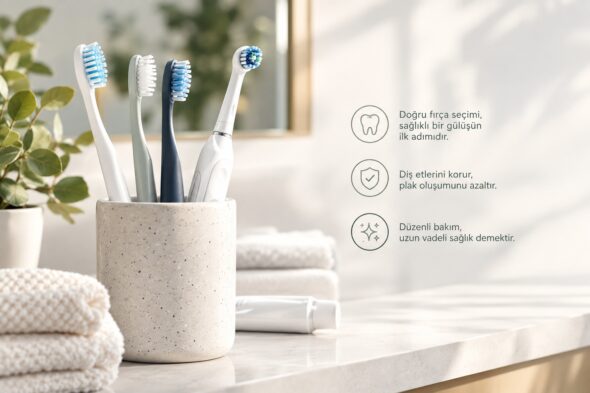
Choosing the right toothbrush may seem like a simple decision. But the toothbrush you use every day can have a significant impact on your oral health. The right toothbrush can help remove plaque effectively while being gentle on your teeth and gums.
With so many different types of toothbrushes available, it is natural to wonder which option is best for you. When you choose the right toothbrush for your needs, you can improve your oral health.
Should you choose a manual or electric toothbrush? Is a soft-bristled toothbrush really better? Does the size of the toothbrush head matter?
How to Choose the Right Toothbrush
In this guide, we explain the essential factors to consider when choosing the right toothbrush for your everyday oral care routine.
Why Does Choosing the Right Toothbrush Matter?
Brushing your teeth twice a day is one of the most important habits for maintaining good oral health. However, brushing technique and the type of toothbrush you use also matter.
A toothbrush that is too hard, too large or uncomfortable to use may make effective brushing more difficult. On the other hand, a well-designed toothbrush with soft, comfortable bristles can help clean the teeth and gum line without causing unnecessary irritation.
The aim is not to find the most expensive toothbrush. It is to find one that allows you to clean your teeth thoroughly and comfortably.
1. Choose Soft Bristles
For most people, a soft-bristled toothbrush is a suitable choice.
Hard or medium bristles are not necessarily better at removing plaque. In fact, brushing too aggressively with a firm-bristled toothbrush can irritate the gums and contribute to tooth wear, particularly if excessive pressure is used.
Soft bristles can effectively remove plaque when combined with the correct brushing technique.
If your gums are sensitive or you notice discomfort while brushing, choosing a toothbrush with soft bristles may make your daily routine more comfortable.
2. Consider the Size of the Toothbrush Head
The size of the toothbrush head is another important factor.
A smaller or medium-sized head can make it easier to reach areas that are difficult to clean, including the back teeth and the areas around the gum line.
A toothbrush head that is too large may make it harder to manoeuvre around the mouth.
When choosing a toothbrush, look for a head size that allows you to comfortably reach all areas of your mouth without excessive effort.
3. Manual or Electric Toothbrush: Which Should You Choose?
Both manual and electric toothbrushes can be effective when used correctly.
A manual toothbrush is simple, affordable and does not require charging. With good technique and adequate brushing time, it can provide effective everyday cleaning.
An electric toothbrush, meanwhile, can make brushing easier for some people. Certain models include features such as built-in timers, pressure sensors and different brushing modes.
For people who tend to brush too hard or find it difficult to maintain consistent brushing technique, some electric toothbrushes may be particularly useful.
The most important factor is not whether your toothbrush is manual or electric, but whether you use it correctly and consistently.
4. Look for a Comfortable Handle
A toothbrush should feel comfortable in your hand.
A handle that is too small, too large or difficult to grip can make brushing less controlled. This may be particularly relevant for people with limited hand mobility or dexterity.
Choose a toothbrush that feels secure and comfortable while allowing you to make gentle, controlled movements.
5. Do Not Forget Your Gums
Good oral hygiene is not only about cleaning the teeth. The gum line also needs regular attention.
Plaque can accumulate where the teeth meet the gums, and inadequate cleaning in this area can contribute to gum inflammation.
When brushing, gently position the bristles towards the gum line and use small, controlled movements rather than aggressive scrubbing.
If your gums regularly bleed while brushing, do not simply switch to a harder or softer toothbrush without addressing the underlying cause. Persistent gum bleeding can be a sign of gum disease and should be assessed by a dental professional.
6. Replace Your Toothbrush Regularly
Even a good-quality toothbrush needs to be replaced regularly.
Over time, toothbrush bristles can become worn, bent or frayed. A worn toothbrush may not clean as effectively as a new one.
As a general guide, consider replacing your toothbrush or electric toothbrush head approximately every three to four months, or sooner if the bristles become visibly worn.
If you have recently been ill, replacing your toothbrush may also be worth considering as part of your normal oral hygiene routine.
7. Choose the Right Toothbrush for Your Individual Needs
There is no single toothbrush that is perfect for everyone.
Your ideal toothbrush may depend on your oral health, age, dental restorations and personal preferences.
For example:
Sensitive gums: A soft-bristled toothbrush may be more comfortable.
Braces: A toothbrush designed for orthodontic appliances may make cleaning around brackets and wires easier.
Limited hand mobility: An electric toothbrush with an easy-to-grip handle may be helpful.
Children: A child-sized toothbrush with a small head and soft bristles is generally more appropriate.
Dental implants or other restorations: Your dentist may recommend specific cleaning tools depending on your individual situation.
If you are unsure which toothbrush is suitable for you, ask your dentist or dental hygienist for personalised advice.
8. Do Not Rely on Your Toothbrush Alone
Even the best toothbrush cannot clean every area of your mouth perfectly.
Plaque and food debris can accumulate between the teeth, where toothbrush bristles may not reach effectively.
Depending on your individual needs, your oral hygiene routine may also include:
Dental floss
Interdental brushes
A water flosser
Fluoride toothpaste
An antimicrobial mouthwash, where recommended by a dental professional
Interdental cleaning is particularly important because the spaces between teeth can be difficult to clean with a toothbrush alone.
9. Avoid Brushing Too Hard
One of the most common mistakes in toothbrushing is applying too much pressure.
You do not need to scrub your teeth aggressively to remove plaque. Excessive brushing pressure can irritate the gums and contribute to tooth surface wear.
Instead, use gentle, controlled movements and allow the toothbrush to do the work.
If you frequently notice that your toothbrush bristles become flattened or spread out after a short period, you may be applying too much pressure.
10. Look for Features That Encourage Better Brushing
Modern toothbrushes offer a wide range of features. Some can be genuinely useful, while others may simply be a matter of personal preference.
Depending on your needs, useful features may include:
A two-minute timer
A pressure sensor
Different brushing modes
A comfortable non-slip handle
A replacement-head reminder
A small, easy-to-manage brush head
You do not necessarily need a high-end toothbrush to maintain good oral health. Choose features that are genuinely useful for your own brushing habits.
How to Choose a Toothbrush for Children
Children need toothbrushes that are appropriate for their age and mouth size.
A child’s toothbrush should generally have:
A small brush head
Soft bristles
A comfortable handle
An age-appropriate design
Parents should also supervise young children while brushing and help them develop good brushing habits.
As children grow, their toothbrush should be replaced with a more suitable size when necessary.
How Often Should You Change Your Toothbrush?
A toothbrush should generally be replaced every three to four months, or sooner if the bristles become frayed or damaged.
If the bristles look worn, bent or flattened, it is probably time for a replacement.
For electric toothbrush users, the same principle applies to the brush head.
Regular replacement helps ensure that the bristles remain in good condition and can clean the teeth effectively.
The Right Toothbrush Is Only Part of Good Oral Hygiene
Choosing the right toothbrush is important, but it is only one part of maintaining a healthy mouth.
A good daily routine should include brushing twice a day with fluoride toothpaste, cleaning between the teeth regularly and having routine dental check-ups.
Your brushing technique also matters. Gentle, thorough brushing is generally more beneficial than aggressive scrubbing.
If you experience persistent bleeding gums, tooth sensitivity, bad breath, dental pain or other changes in your mouth, speak to a dental professional rather than simply changing your toothbrush.
Final Thoughts
The best toothbrush is one that is comfortable, easy to use and suitable for your individual oral health needs.
For most people, a soft-bristled toothbrush with an appropriately sized head is a good starting point. Whether you choose a manual or electric toothbrush, consistent brushing with the correct technique is more important than choosing the most expensive product.
If you are unsure which toothbrush is right for you, your dentist can assess your teeth and gums and recommend the most appropriate option for your specific needs.
Frequently Asked Questions
What type of toothbrush is best for your teeth?
For most people, a toothbrush with soft bristles and a comfortable, appropriately sized head is a good choice. Your individual dental needs may require a different type of toothbrush.
Are soft toothbrushes better than hard toothbrushes?
Soft-bristled toothbrushes are generally suitable for most people. Hard bristles do not necessarily clean better and may cause irritation or contribute to tooth wear when combined with excessive brushing pressure.
Is an electric toothbrush better than a manual toothbrush?
Both can be effective. An electric toothbrush may be useful for people who have difficulty maintaining consistent brushing technique or controlling brushing pressure, but a manual toothbrush can also provide effective cleaning when used correctly.
How often should I replace my toothbrush?
As a general guide, replace your toothbrush or electric toothbrush head every three to four months, or sooner if the bristles become worn or damaged.
Why do my gums bleed when I brush?
Bleeding gums can be associated with plaque-related gum inflammation, among other causes. If your gums regularly bleed when brushing, it is advisable to have them assessed by a dentist rather than simply changing your toothbrush.
Can the wrong toothbrush damage your teeth?
Using a hard-bristled toothbrush or brushing with excessive pressure can contribute to gum irritation and tooth surface wear. Using soft bristles and a gentle brushing technique can help reduce unnecessary trauma.
Do I need an expensive toothbrush?
No. Price alone does not determine how effective a toothbrush is. A toothbrush that is comfortable, appropriate for your needs and used correctly can be an effective part of your oral hygiene routine.