This is one of the most common questions patients ask when researching dental implant treatment.
However, it would not be scientifically accurate to answer this question this way. It should not rely on naming a single implant brand or model.
What Is the Best Dental Implant
From a dentist’s perspective, what is the best dental implant depends on more than the brand name.
The patient’s bone structure matters.
The location of the missing tooth, gum health, bite, overall health, and the restoration type should be considered together.
A successful implant treatment is not determined by the implant alone. Accurate diagnosis and careful treatment planning establish the foundation for success. Appropriate implant selection and precise surgical placement support a predictable outcome. A well-designed restoration and long-term maintenance complete the treatment. This raises the question: what is the best dental implant for your situation?
What Is a Dental Implant?
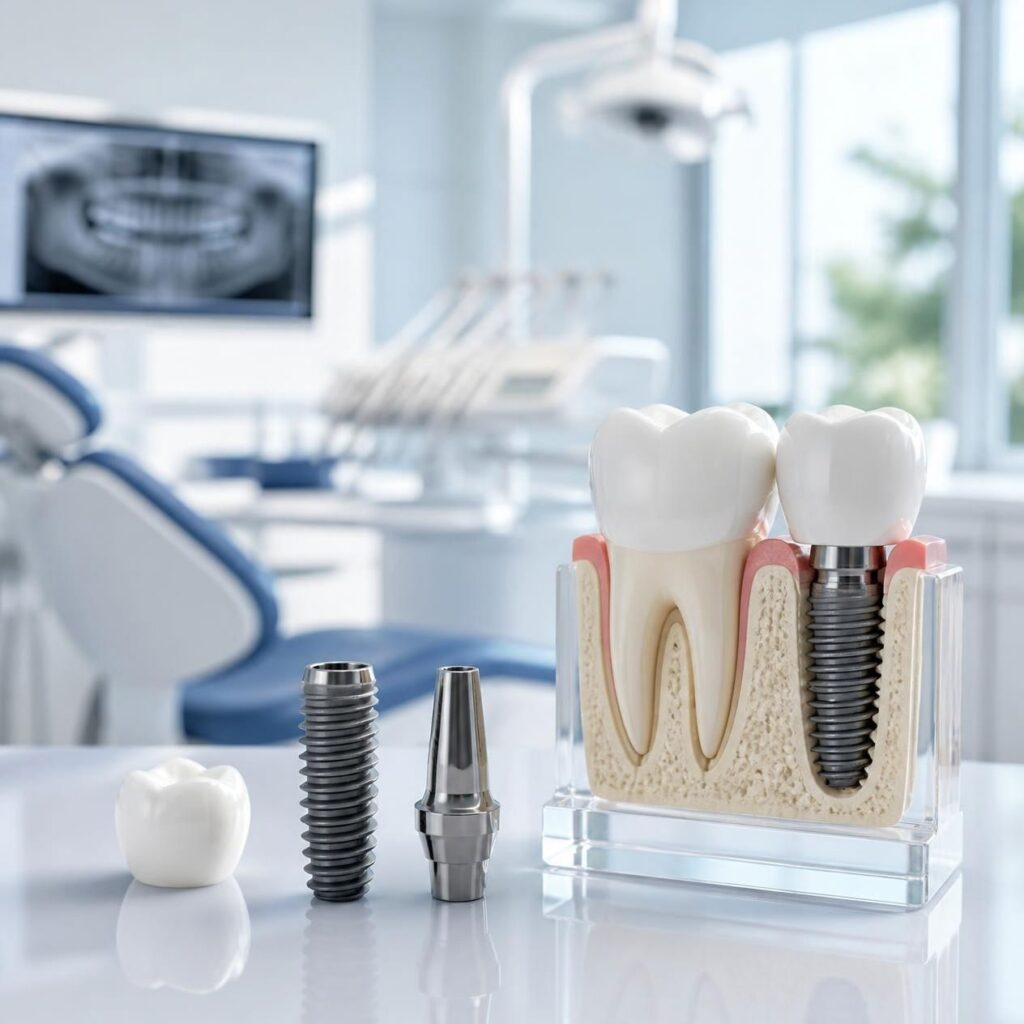
A dental implant is an artificial tooth root that is placed into the jawbone to support a dental restoration when one or more teeth are missing. Most modern dental implants are manufactured from biocompatible materials, particularly titanium.
The process through which an implant becomes integrated with the surrounding bone is called osseointegration. This biological process is one of the foundations of implant dentistry.
However, successful osseointegration alone does not guarantee a successful long-term result. The health of the tissues surrounding the implant, the position of the implant, the design of the restoration, oral hygiene, and regular professional follow-up are also important.
Is There Really Such a Thing as the “Best” Dental Implant?
There is no single implant brand or implant model that can be considered the “best” choice for every patient.
Different implant systems have different design characteristics. Implant diameter, length, surface characteristics, body design, connection type, and prosthetic components may all be relevant when planning treatment.
For example, tapered and non-tapered implant designs may have different indications depending on the clinical situation. The choice of implant design should therefore be considered together with the patient’s anatomy, the surgical approach, and the planned restoration.
For this reason, instead of asking only “Which implant brand is the best?”, it is often more useful to ask, “Why is this particular implant appropriate for my situation?”
What Features Are Considered When Selecting a Dental Implant?
When evaluating an implant system, it is important to consider the implant as part of the entire treatment rather than focusing on a single technical feature.
Implant material: Titanium has been used extensively in implant dentistry and is known for its biocompatibility and clinical history.
Implant surface: Surface characteristics can influence the biological interaction between the implant and surrounding bone. However, surface technology alone does not determine whether an implant is the best choice.
Implant geometry: The length, diameter, and body design of an implant should be selected according to the available bone and the anatomical characteristics of the treatment area.
Implant-abutment connection: The connection between the implant and the prosthetic component is an important consideration in both restorative planning and long-term maintenance.
Prosthetic options: The implant system should be compatible with the planned restoration, whether that involves a single crown, a bridge, or an implant-supported prosthesis.
Manufacturer and product traceability: A reliable manufacturer, appropriate quality standards, product traceability, and long-term access to compatible prosthetic components are also relevant clinical considerations.
What Is More Important Than the Implant Brand?
When researching dental implants, patients often focus first on the brand. In reality, several other factors can have a significant influence on the outcome of implant treatment.
Accurate diagnosis and treatment planning are among the most important.
Before an implant is placed, the amount and quality of available bone, relevant anatomical structures, gum and periodontal health, bite, and the aesthetic requirements of the missing tooth area should be carefully evaluated.
This is particularly important in the front region of the mouth, where implant position has a major influence on the surrounding hard and soft tissues and the final aesthetic result.
The goal is not simply to place an implant into the available bone. The objective is to position the implant in a way that supports both biological health and the planned restoration.
For this reason, in implant dentistry, the question “Which implant?” should be considered alongside “Why this implant, for this patient, in this position, with this restoration?”
Can the Same Implant Be Used for Every Patient?
No. Every patient has different anatomical and clinical requirements.
For example, the implant planning of a patient with limited bone height in the posterior upper jaw may be very different from that of a patient with adequate bone volume in the anterior lower jaw.
Likewise, the treatment plan for a single missing tooth is different from the treatment plan for multiple missing teeth or a completely edentulous jaw.
Therefore, implant diameter, length, design, position, and surgical protocol should be determined according to the patient’s anatomy and the planned restoration.
Why Is Bone Volume Important in Implant Treatment?
The amount and anatomy of available bone are fundamental considerations when planning dental implant treatment.
When bone volume is insufficient, placing an implant in an ideal position may be more challenging. Depending on the individual case, bone grafting or other hard- or soft-tissue procedures may become part of the treatment plan.
The goal is not simply to place an implant somewhere within the bone. The aim is to position the implant appropriately from both biological and restorative perspectives.
Patient Factors Also Affect Implant Treatment Outcomes
The outcome of dental implant treatment does not depend solely on the implant system. The patient’s general health and oral hygiene habits can also influence the long-term condition of the implant and the surrounding tissues.
Smoking: Smoking is an important risk factor that can negatively affect the tissues around dental implants and may increase the risk of complications.
Diabetes: Poorly controlled diabetes may be associated with increased risks during implant treatment. The patient’s systemic health should therefore be considered during treatment planning.
Oral hygiene: Good daily oral hygiene is essential for maintaining healthy tissues around dental implants.
Periodontal health: Existing gum or periodontal disease should be appropriately managed before implant treatment whenever possible.
Regular maintenance: Professional examinations after implant treatment can help monitor the implant, restoration, and surrounding tissues.
Scientific evidence has identified smoking as an important risk factor associated with implant complications and bone loss around implants. In patients with diabetes, the level of disease control is also an important consideration.
Does a More Expensive Implant Mean a Better Implant?
A higher price does not automatically mean that an implant is clinically superior or will necessarily provide a better long-term result.
The cost of implant treatment may include more than the implant itself. Surgical procedures, bone or soft-tissue procedures when necessary, prosthetic components, the final restoration, and follow-up care may all contribute to the overall treatment cost.
For this reason, comparing implants based solely on price or brand name is not the most meaningful approach. It is more useful to understand the complete treatment plan and why a particular implant system has been selected for the individual patient.
What Should Patients Ask Their Dentist About Implant Treatment?
Patients should feel comfortable discussing their treatment plan openly with their dentist. Asking the following questions can help you understand why a particular implant approach has been recommended:
Why is dental implant treatment recommended in my case?
Is the amount and quality of my jawbone suitable for an implant?
Will I need a bone graft or soft-tissue procedure?
Why has this particular implant system been selected for my treatment?
Why were this implant’s diameter and length chosen?
What type of restoration will be placed on the implant?
What type of maintenance and follow-up will I need after treatment?
Could my general health or medications affect my implant treatment?
The Goal Is Not the “Best Implant” — It Is the Right Implant
So, what is the best dental implant?
There is no single brand or model that can be considered the best option for every patient.
A well-planned implant treatment considers the patient’s bone anatomy, the location of the missing tooth, functional and aesthetic requirements, the planned restoration, and the patient’s general health.
From a clinical perspective, the right implant is not simply an implant with impressive technical specifications. It is an implant that is appropriate for the patient, placed in the correct position, with careful planning and followed by an appropriate prosthetic restoration.
Therefore, when researching dental implants, it is worth asking more than “Which implant brand do you use?” A more meaningful question is: “Why is this implant the right choice for my particular case?”
Predictable long-term implant treatment depends on several factors working together: accurate diagnosis, evidence-based treatment planning, appropriate surgical technique, correct implant positioning, suitable prosthetic design, good oral hygiene, and regular professional maintenance.
Frequently Asked Questions About Dental Implants
What is the best dental implant brand?
There is no single dental implant brand that is the best choice for every patient. Implant selection should be based on the patient’s anatomy, clinical needs, planned restoration, and the dentist’s overall treatment plan.
How can I tell if a dental implant is high quality?
It is not possible to determine implant quality simply by looking at the brand or price. Scientific evidence, manufacturing and quality standards, product traceability, clinical experience, and suitability for the patient’s treatment plan should all be considered.
Is a more expensive dental implant better?
Price alone does not determine the long-term success of a dental implant. Surgical planning, implant positioning, prosthetic design, oral hygiene, smoking, general health, and regular maintenance can all influence treatment outcomes.
Can the same dental implant be used for every patient?
No. Factors such as bone volume and anatomy, the location of the missing tooth, the number of missing teeth, aesthetic requirements, and the planned restoration can all influence implant selection.
What determines how long a dental implant lasts?
The long-term success of an implant depends on multiple factors. Appropriate treatment planning and placement, healthy tissues around the implant, good oral hygiene, smoking status, general health, suitable prosthetic design, and regular professional maintenance all play important roles.